

In Part 1, we looked at what actually matters when it comes to therapist website SEO.
In Part 2, we went through the things that can quietly hurt your rankings.In this final part, we’re bringing it all together into something simpler.
Not more tips. Not more things to optimize.
Just a simple system to approach SEO that actually works long-term, without turning it into a full-time job.
Why SEO can feel overwhelming (and why it doesn’t have to)
If you’ve ever looked into SEO, you’ve probably come across long lists of things you “should” be doing.
Keywords, backlinks, blog posts, technical fixes… it can quickly start to feel like a lot.
And what usually happens is one of two things:
- you try to do everything at once and burn out
- or you don’t know where to start, so nothing really moves forward
Most therapist websites don’t need more complexity.
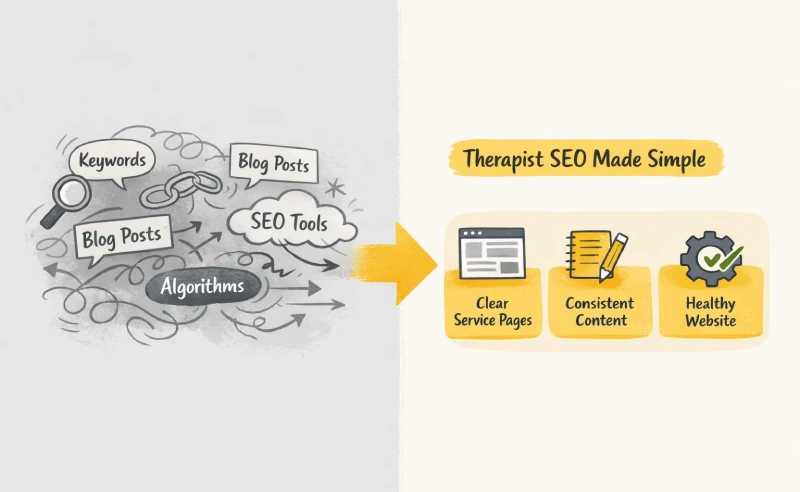
They need a small number of things done clearly and consistently.
A simple SEO system that actually works
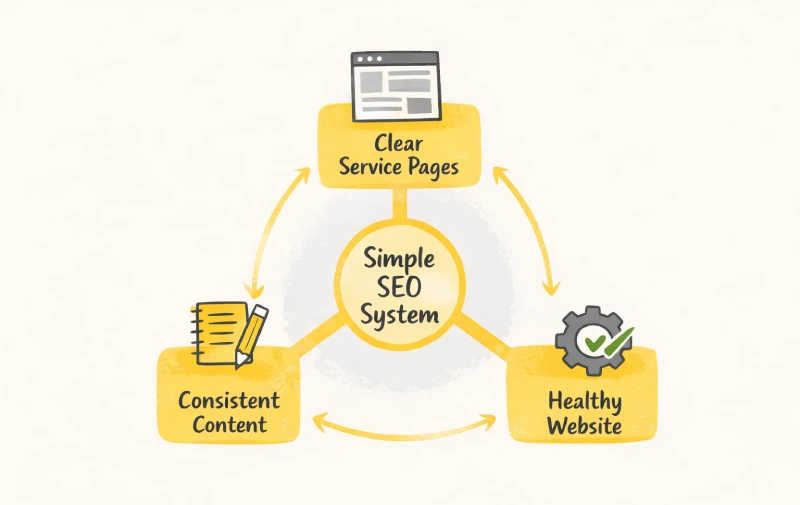
Instead of trying to keep up with everything, it helps to think in terms of a few core pieces that support each other.
1. Clear service pages (your foundation)
Your service pages are the most important part of your SEO.
These are the pages people land on when they’re actively looking for support.
They should make it very clear:
- who you help
- what you help with
- how someone can take the next step
If these pages are vague or hard to navigate, adding more content won’t fix that.
Clarity here does most of the heavy lifting.
2. A small, consistent content rhythm
You don’t need to blog every week.
In fact, most therapists don’t have the time or energy for that, and that’s completely fine.
What works much better is consistency.
One thoughtful article a month is more than enough.
You can keep it simple by writing about:
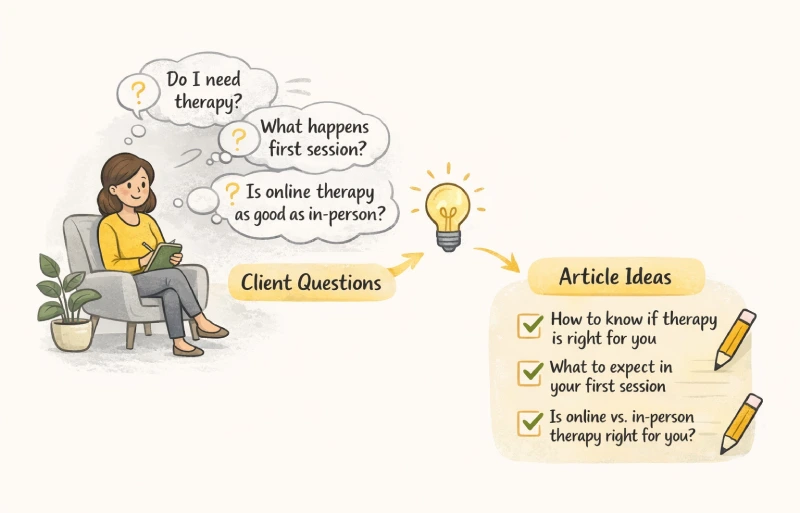
- questions clients often ask
- things people are unsure about before reaching out
- topics that come up again and again in sessions
If you’ve explained something more than once, it’s probably worth turning into a page or article.
3. A technically healthy site (without overthinking it)
This is the part that often sounds the most intimidating, but it doesn’t need to be.
You don’t need to understand SEO tools or dive into technical details.
In most cases, this simply means:
- your site works well on your phone
- pages load without noticeable delays
- links and buttons work as expected
If you’re using a solid platform or working with a developer, this is often already taken care of.
And if you’re not sure, it’s okay to leave this part as is for now and focus on your content and structure first.
What to actually write about
One of the biggest sticking points is simply: what should I write about?
A good place to start is thinking about what your clients are already asking or wondering.
For example:
- What happens in your first session?
- How do you know if therapy is right for you?
- What’s the difference between online and in-person therapy?
- What does working with you actually look like?
These kinds of topics tend to align naturally with what people search for.
And more importantly, they help build trust.
SEO is not separate from your website
It’s easy to think of SEO as something that lives in blog posts or keywords.
But in reality, it’s much more connected to how your website works as a whole.
A clear, well-structured site:
- helps people understand what you offer
- makes it easier to take the next step
- and signals to search engines that your site is useful
SEO and user experience are not separate things.
They support each other.
The mindset shift that makes this sustainable
You don’t need:
- dozens of blog posts
- complicated tools
- constant updates
You need:
- clear service pages
- a few helpful articles
- and consistency over time
That’s what tends to move things forward.
Should you hire someone to help with SEO?
You might be wondering if this is something you should handle yourself, or if it’s worth bringing in help.
The honest answer is: both are valid.
If you enjoy working on your website and have the time to implement these changes, you can absolutely make meaningful progress on your own. Even small improvements, done consistently, can go a long way.
At the same time, working with a professional can help you move faster, avoid common pitfalls, and build a more intentional structure from the start. It’s not just about SEO, but how your website as a whole supports your practice.
If that’s something you’re looking for, I can help with that. But if not, you’re still in a great position to start with the steps above.
A simple way to start
If you want to take a first step without overcomplicating things, you could start here:
- improve one of your service pages
- write one article based on a real client question
- check how your site looks on your phone
- add a few links between your pages
That’s enough.
Final thoughts
SEO tends to work best when it reflects real clarity.
When your website is easy to understand and speaks to the right people, search engines tend to follow.
You don’t need to do everything.
You just need to do a few things well, and give them time to work.
A Little Extra Support
If you want a simple step by step method to help your website convert more visitors into clients, you might love The Clear Website Method. It guides you through clarity, messaging, layout and booking flow. These are the things that help people feel safe enough to reach out.
SEO helps people find you.
Clear structure helps them stay.